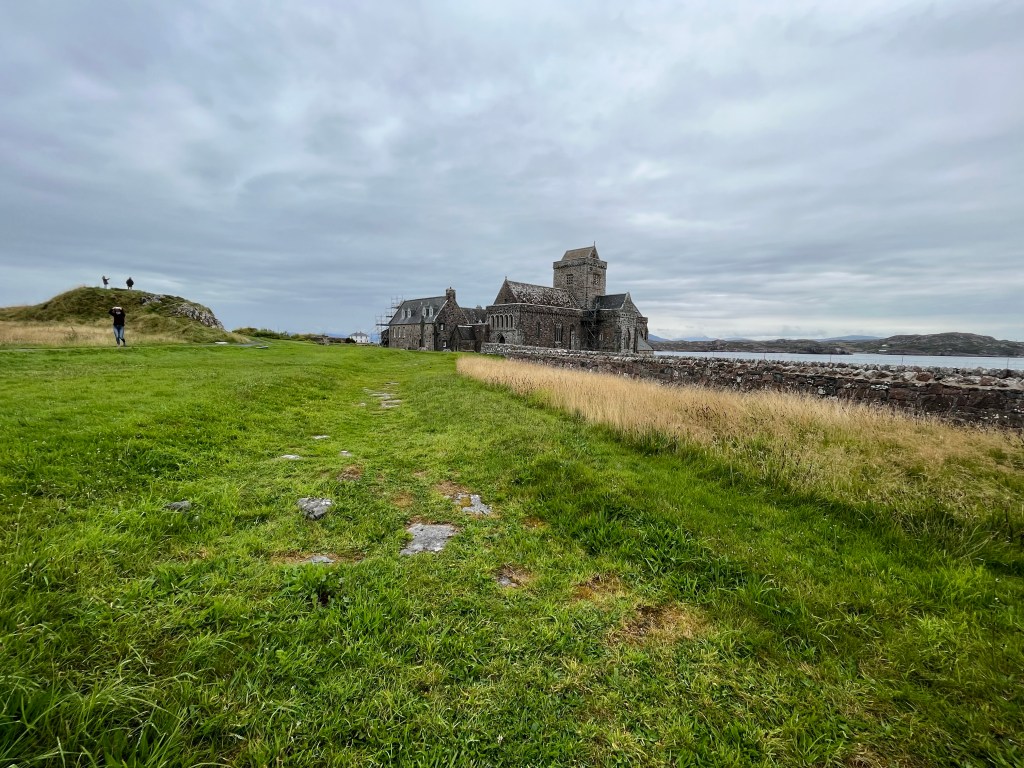
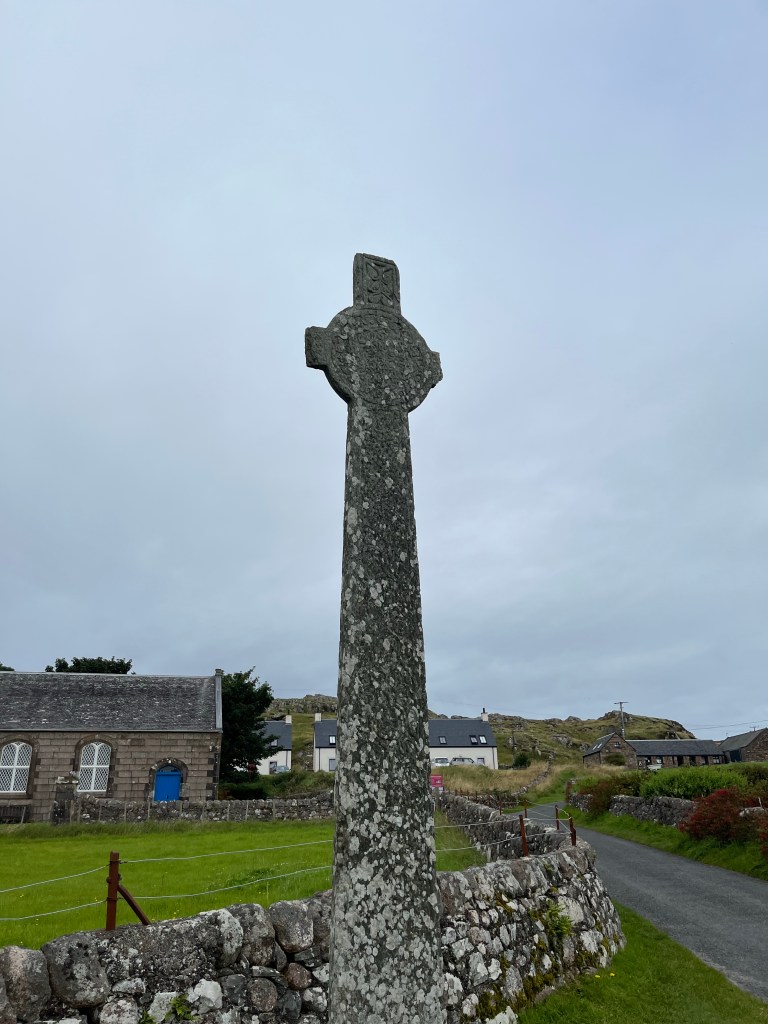
I walked the pilgrim path towards the abbey. In the Middle Ages there would have been a series of chapels, crosses, and other sites for you to offer devotion and prayers along the way. Some of these still survive. You first come across the ruined medieval nunnery, which has a small chapel with its origins going back to the early history of the monastery. As you continue to walk along, you pass the visitor centre, the kitchen-gardens of the two major hotels, and come to a high cross. Early modern in date, this cross was sponsored by a local noble family hoping to channel the prayers of Iona’s pilgrims for the health of their own souls.
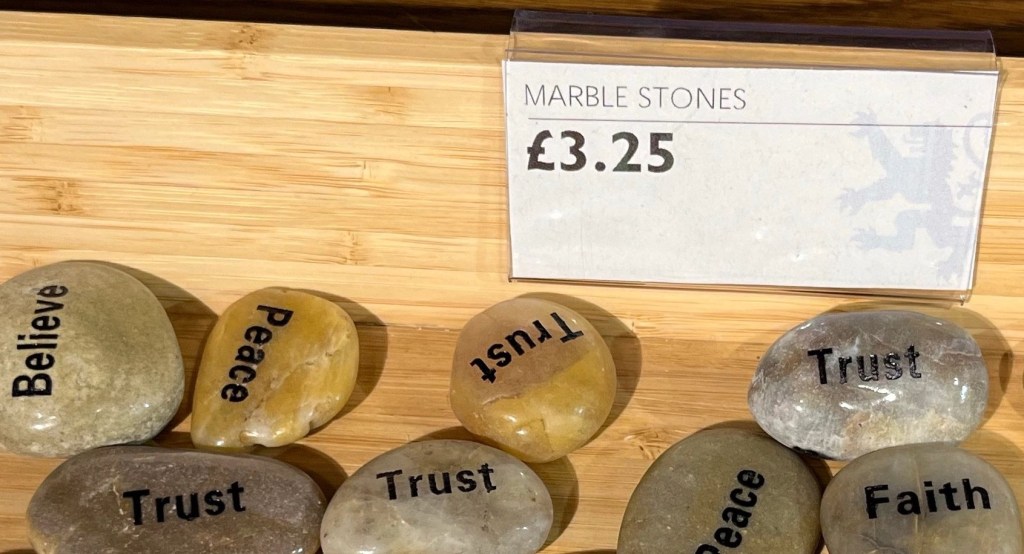
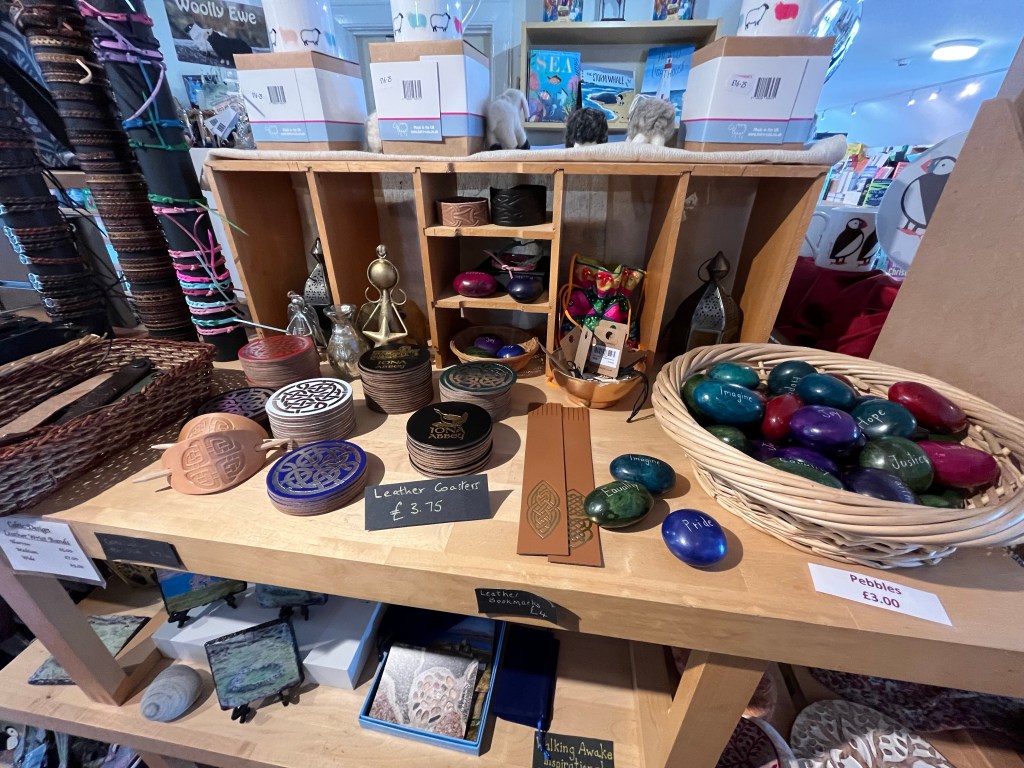
The pilgrim road took physical form as the coffin highway that still can be seen within the abbey complex. This stone highway leads right up to the small chapel devoted to St Columba himself. Though its date is contested, there is a strong argument to be made that this stone pathway was not only early medieval in date, but also one of the first roads paved after the departure of Roman legions from the British Isles. I got to the abbey early. Already a few dozen people were exploring the grounds: the modern pilgrim road to Iona is very well trodden. Full ferries arrive on the hour and scores of tourists quickly march up the path of devotion to see the abbey, before descending it again to catch their ferry, their bus, make their next scheduled stop, make their flight or train home. In contrast to what would have been a slow and methodical journey for medieval pilgrims, kneeling in prayer at each site along the path, the walk has taken on the pace of the modern world. To be unsympathetic: now the major checkpoints to stop at are the wool shop, for some souvenir socks; the craft shop, for a coffee and a tea-towel; the larder, for some highland cheese or whisky ; and then finally the abbey gift shop, for a stuffed puffin cuddly-toy, or marble stones reading ‘Hope’, ‘Peace’, ‘Trust’. I can’t complain – this modern pilgrim path makes my own journey to Iona possible.
The abbey and island are largely supported by the steady flow of these pilgrims. As I will discuss later, the day I spent exploring the abbey complex, and even the medieval graveyard next to it, was deeply impacted by it being a shared experience, whether I liked it or not. Not only an experience I shared with the countless pilgrims who have made this journey over the past fifteen hundred years, but one I shared physically with close to a hundred people exploring the abbey grounds, and double that amount wandering the island.
After my day was done, I wandered back to my campsite. It is curious to note that the cenotaph is not on the major tourist and pilgrim routes. It sits on the coast road that heads away from the town centre. There is a bench in front of it looking out on the Sound of Iona. Sailboats are anchored just off shore. One’s gaze is inevitably drawn just to the left, where in the corner of one’s eye, you see the patio to the island’s bar-restaurant. On that bench you can hear the steady wash of conversation, as people enjoy a pint or fish and chips while they wait for their ferry.

 An Eye on the Sail