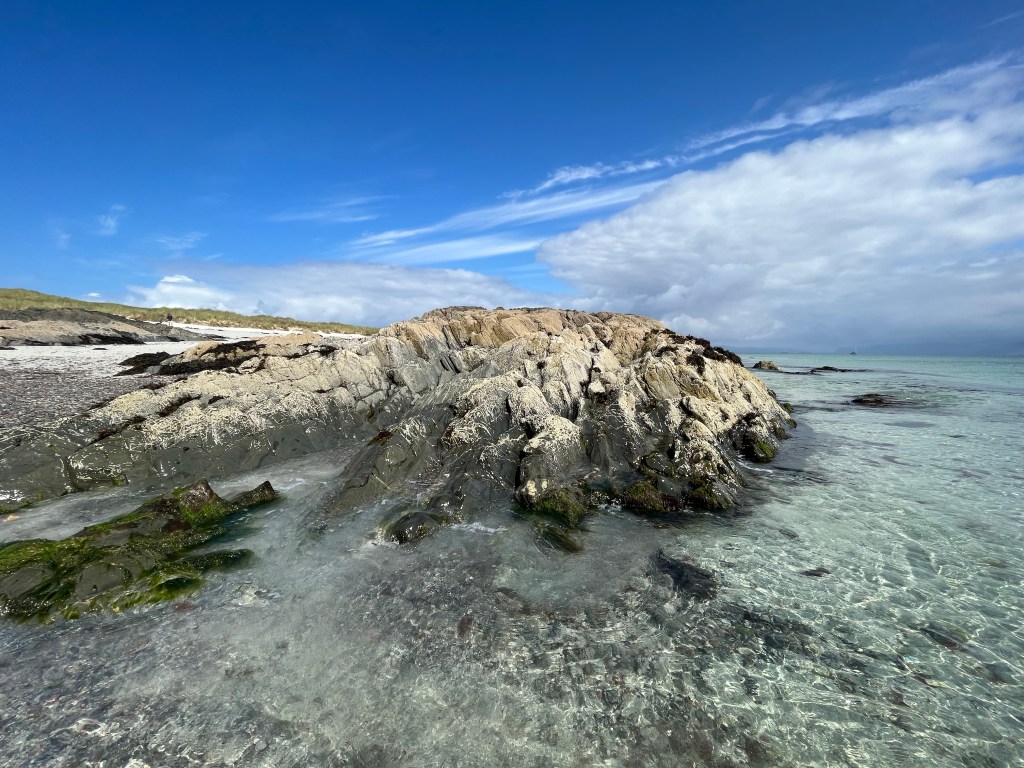
It was a sunny day on Iona. I had been planning to tour the monastery site but, seeing the weather, I thought there might not be another day where I could really take my time to walk around the beaches and experience Iona’s tidescape in the sunshine. I set out looking for molluscs.

I walked up to the north east coast. It was apparently on this beach that Vikings martyred a number of Iona’s monks in the ninth century. I was not the only one there looking at the tidal pools and beaches – a family were searching for shells and other mementos to take home from Iona. I was however part of a more exclusive group of visitors and residents looking to go swimming.
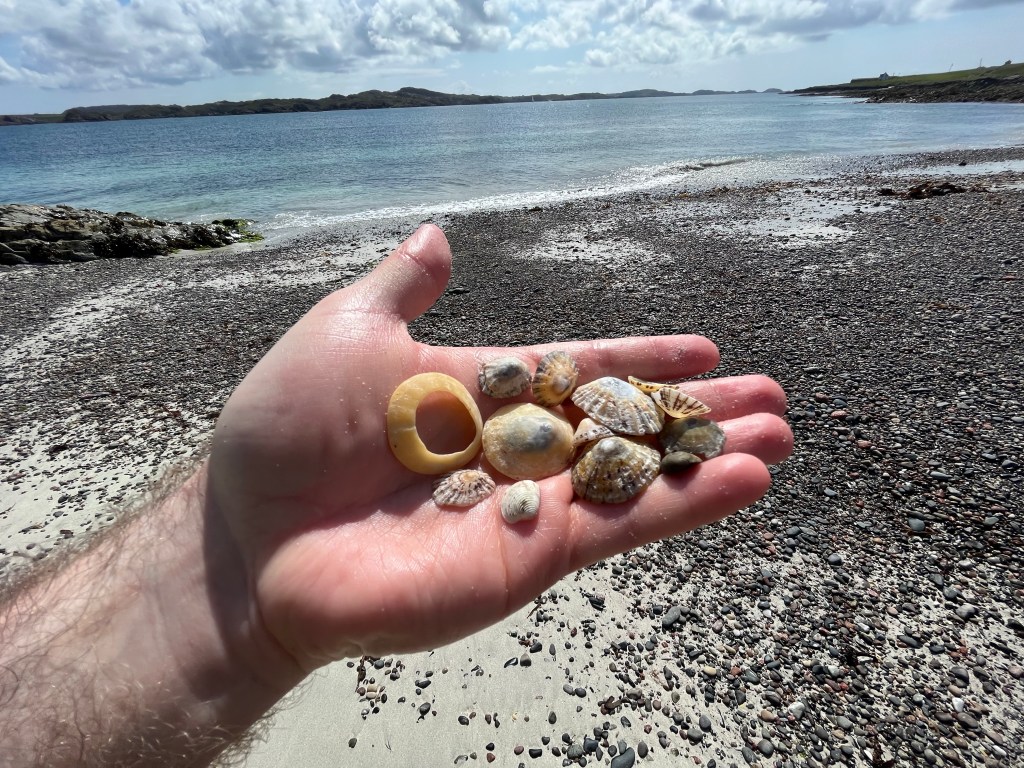
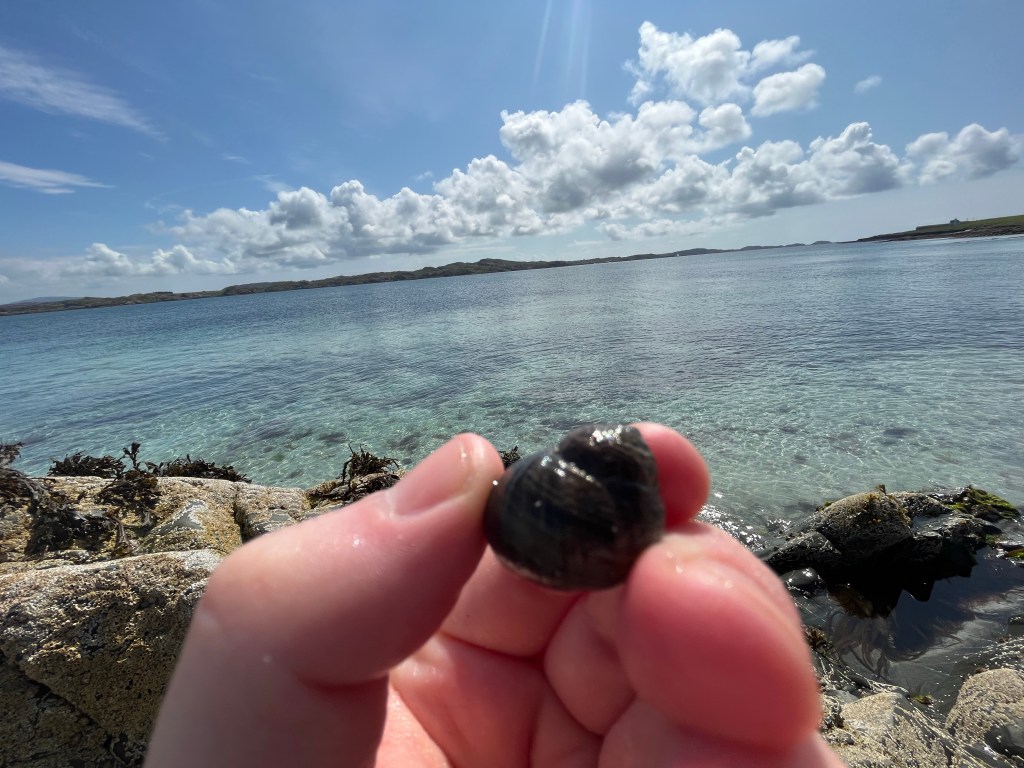
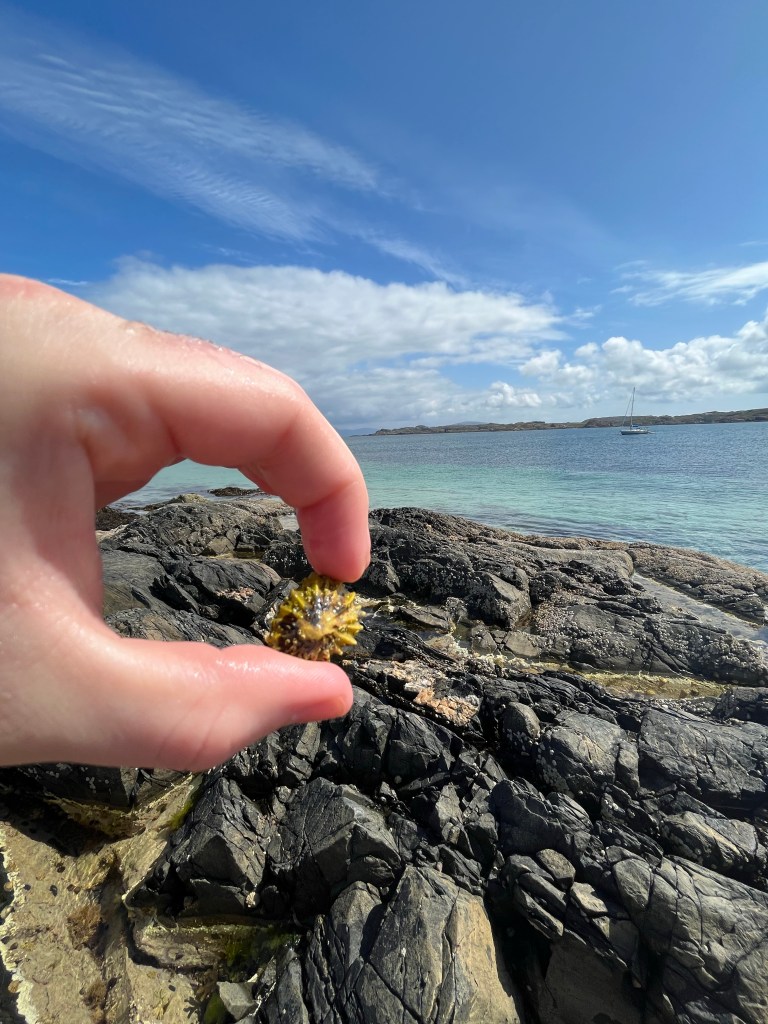

I started by looking around the rocks. Archaeologists, comparing the Iron Age site at Dùn Cùl Bhuirg and the early medieval monastery, looked at the fish and molluscs consumed by Iona’s residents to help them understand the diet and communities that lived on the island. One of the main conclusions they made was that the growth in mollusc consumption seen in the early medieval period shows a greater command and systematic exploitation of the tidescape to source food for the monastery. Investigating the tidescape I came across the whelks, limpets and winkles that the monks would have been collecting. Furthermore, the presence of large oysters, not seen in the small collection of Iron Age molluscs, were used to argue that the medieval monastery had a mastery of the surrounding seas, with monks likely diving to collect them.
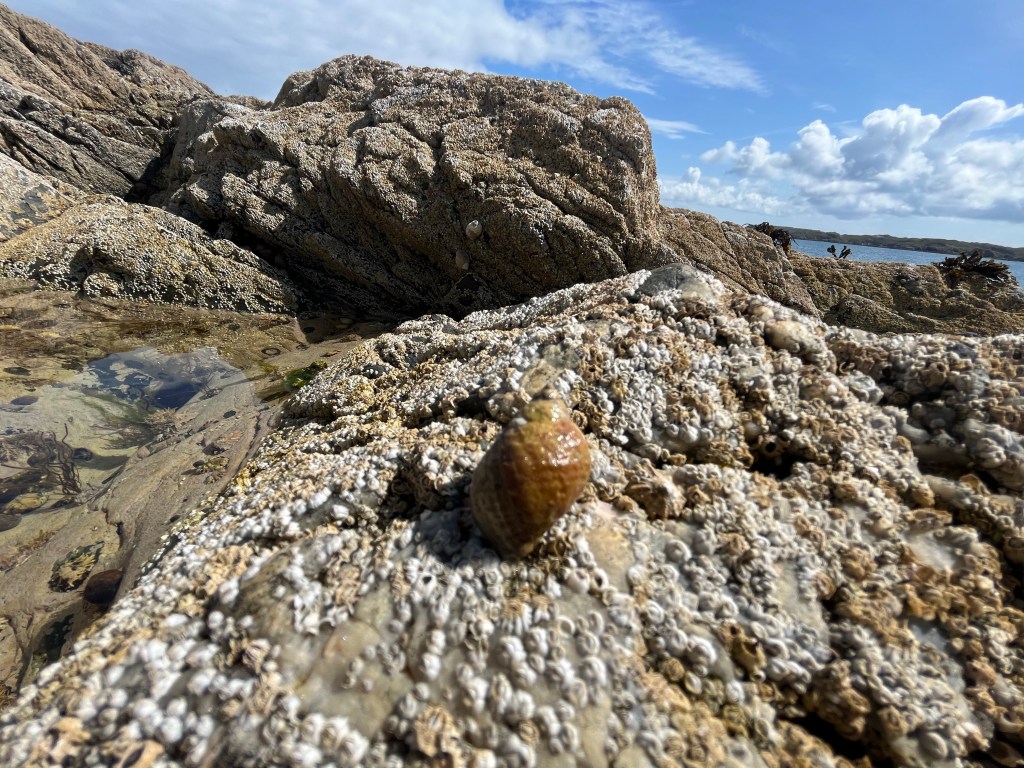
I was suspicious of these claims. There is a deep scholarship debating what mollusc consumption might mean in an early medieval context. In summary, molluscs were rarely eaten by medieval people, and it is harder to imagine one of the richest monasteries in Britain and Ireland doing so. The general view is that there was a taboo against eating molluscs and seafood more generally. When molluscs are eaten therefore, it could be because of starvation or agricultural stress. Medieval sites have been discovered however which did consume molluscs; and on the east coast of Scotland at the sands of Forvie, the harvesting of molluscs may have been to an industrial scale. Iona’s consumption of molluscs was not at this level, making the previous claims of a systematic exploitation of these resources harder to justify. Or, more generously, those claims must be now put in the context of the truly massive shell midden sites that have been recently discovered. Who knows, maybe a new large collection of shells will be discovered on Iona soon.
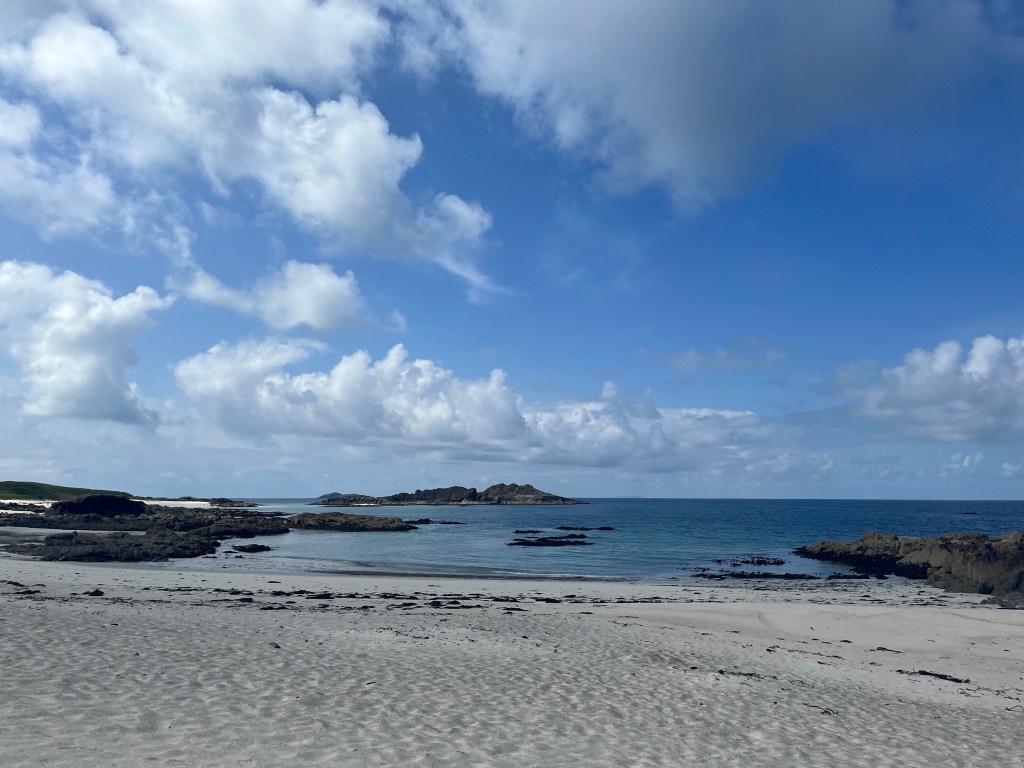
After scrounging around in the tide pools and rocks, I did go for a swim. The water was bitterly cold but certainly refreshing. The experience was slightly spoiled as a helicopter touring around the island was flying just overhead. After the swim I moved to the north beach to see if their tide pools had anything else to discover. Strangely, while there were still limpets, I could find no winkles or whelks in these pools. While searching however I slipped on the rocks and hurt myself. Feeling like I had learnt a lesson, I packed up and headed back to town.

 An Eye on the Sail