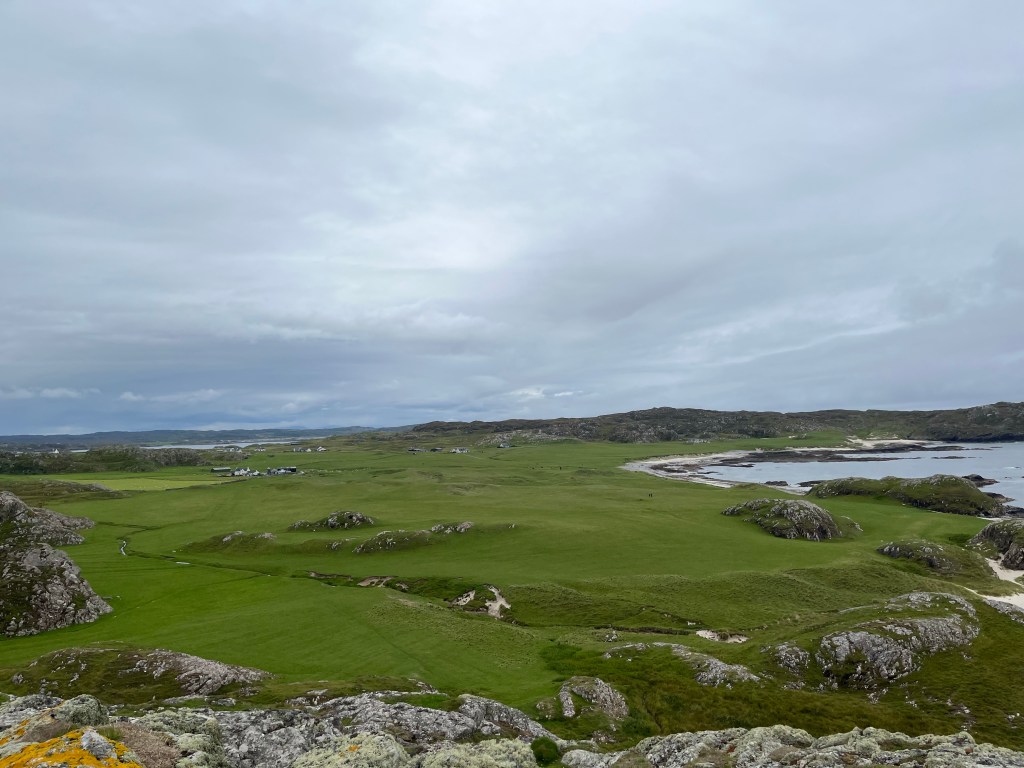
Iona is similar to Ireland: it has five quarters. The fifth for Ireland is the central region around Meath often merged into one of the four counties. The fifth of Iona is the central belt and machair where the modern town and most of Iona’s habitation is today. It is both distinct yet tied to each of Iona’s four points.
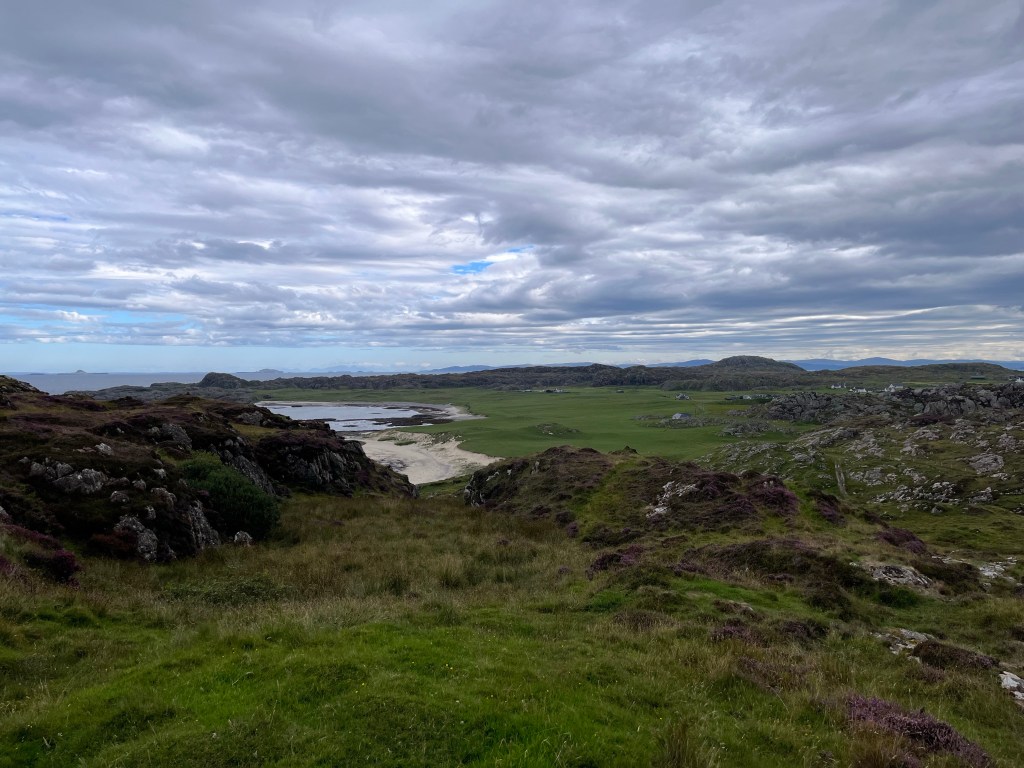
The most arable portions of the island are in this central area and you can see colour of the land itself change. Machair is just the Gaelic, meaning ‘fertile plain’, but refers in this case to the low lying sand-dune/grass-plain mixture found often in the Hebrides, and on Iona to its western central shore. When hiking the northwestern coast of Iona, seeing the bright green machair plain after so much brown and marsh was a sight for some sore eyes and feet. The green of the machair is now exaggerated due to golf course now managing much of this land.
The machair was also an important part of the agricultural life of the medieval monastery. It’s mentioned three times in Adomnán’s Life of St Columba. The monks seemed to do much of their arable farming on this portion of the island and in one episode the spirit of the then departed saint met his farming monks during the harvest to refresh their spirits by his invisible presence (§i.37). In another, we see the monks building a stone wall to protect their fields, most likely of barley (§ii.28). Finally, it was on a small cnoc before the coastal machair that the saint communed with angels (§iii.16).
In terms of the geography of the island itself, this central belt is significant because it’s the easiest path to traverse the island. As you may have guessed from the above blogs, the marsh and hills covering the rest of the island make it hard to traverse otherwise. This lines up with what all the above stories tell us too: they all describe movement linking the two coasts of the island by this strip of land.
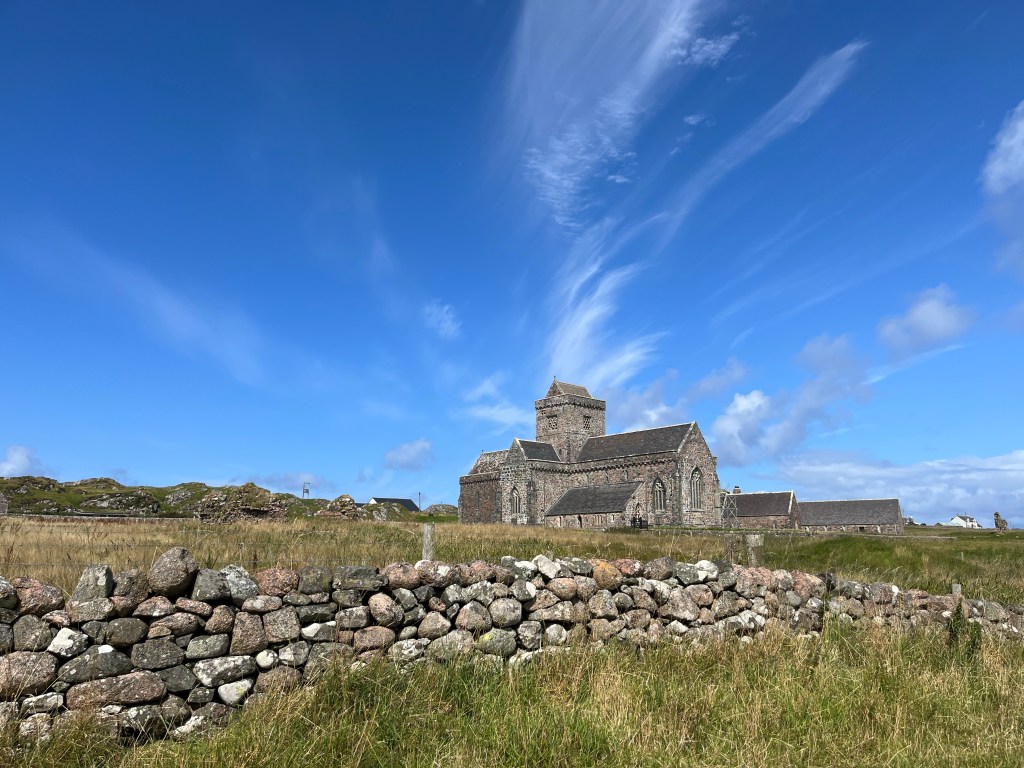
The fertile area of Iona includes the coast and land around the modern abbey too. We know for example that the monks kept a garden and cows to provide them with another source of food (§§ i.18, iii.23).
I’m conscious that I’ve focussed a good number of blogs on the physical geography of Iona. Many of the interesting details about Iona come in the writing done by its monks’ hands not necessarily about the ground on which they tread. Yet as the purpose of this blog is to question if it is necessary to see through their eyes and walk in their shoes to understand how Iona’s monks thought, such preliminary hiking was always going to be necessary. Now (Saturday) it’s my penultimate day on the island. More time will have to be devoted to this project once I’m back in Oxford, but I hope that in this series on the geography of Iona I’ve developed the ground that can be built on later.
 An Eye on the Sail