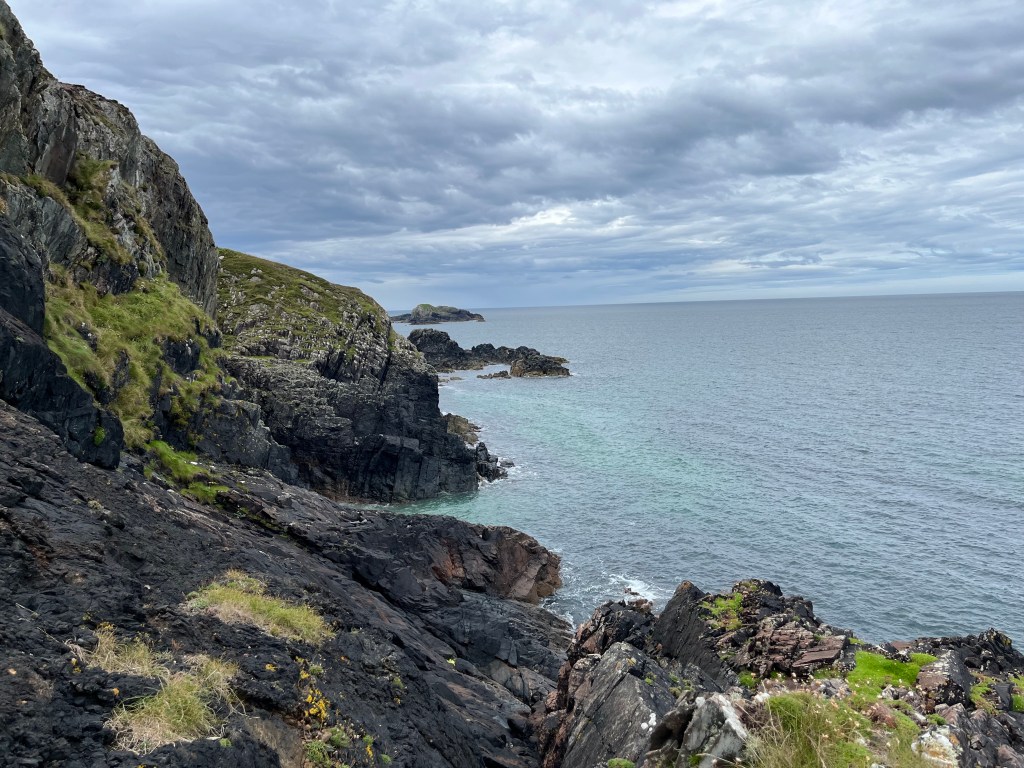
I started on the path to St Columba’s Bay. Past a few holes on the Iona golf course, the track turned into a short valley that came onto a small loch. I had heard in the pub the other day that only a few decades ago this tiny loch supplied much of the water to the island. Pub wisdom is like a historical source: to be eyed with suspicion but trusted on the whole. Instead of continuing on the path, I turned west to bring me close to the shore. Whereas the north coast, and even the northwestern coast, had bays, beaches and gentler slopes down to the shore, the southwest coast was sheer, with rocky promontories that jut out into the Atlantic. These appear as hazards on nautical charts, and are warned about by the admiralty pilots I have read.
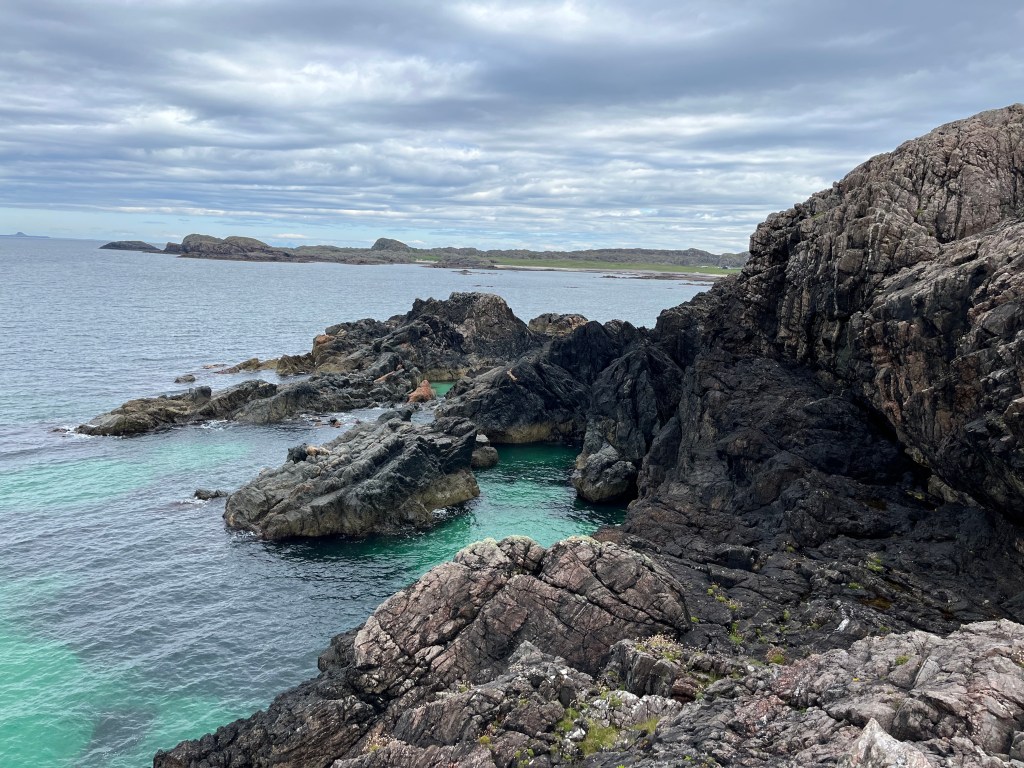
This was my hardest day of hiking. I would often find myself having climbed a peak on the coastline, but the sheer drop meant that I had to return the way I came. Otherwise, I would have to follow the ridge far inshore then zigzag back out. Or, I would risk the steep descent down to make another steep climb again. The sights, however, were fantastic: a harsh but beautiful ocean landscape. Certainly this is the most sublime coast on Iona, even if I might prefer the heather-hills of the northwest.
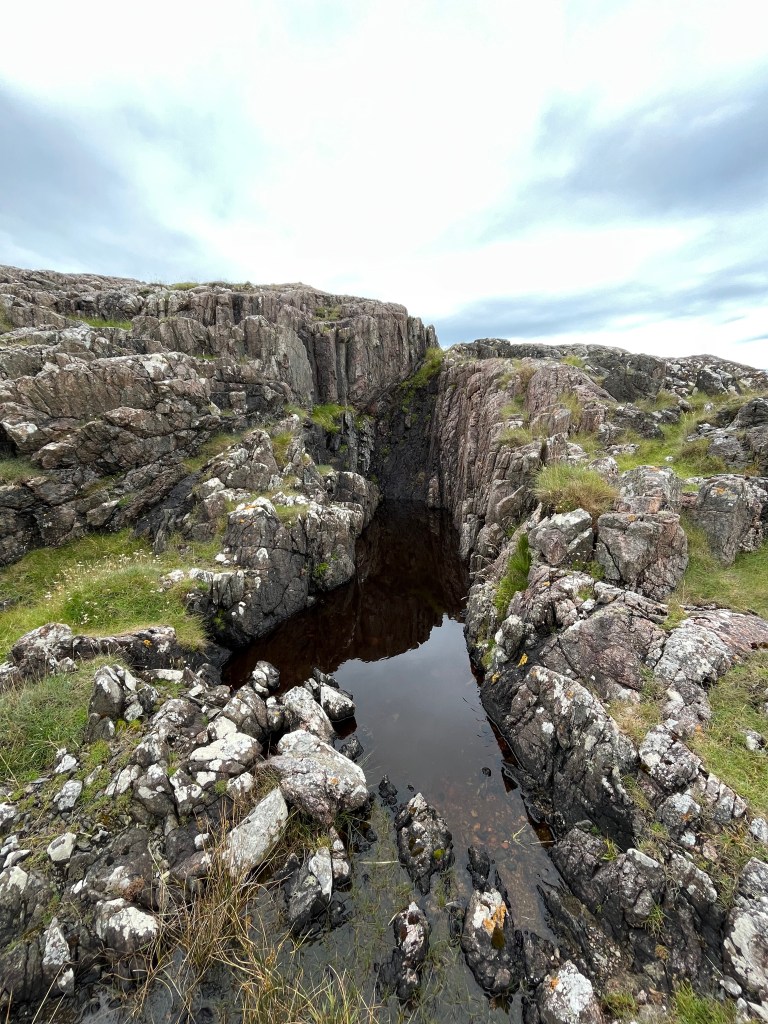
Amid many of the rock faces were spiders. Large, with black and white markings, these spiders seem to use the powerful westerly winds to blow insects into their webs. The only way I could tell before I stepped into one of their webs was if the light was right and if some Atlantic sea-spray gave droplets to their web’s silk.

At the end of the coast, I finally came to a large bay. At low-tide, I was able to walk up and down some crevices that were previously closed off by the ocean. There, stranded seaweed was covered in flies.
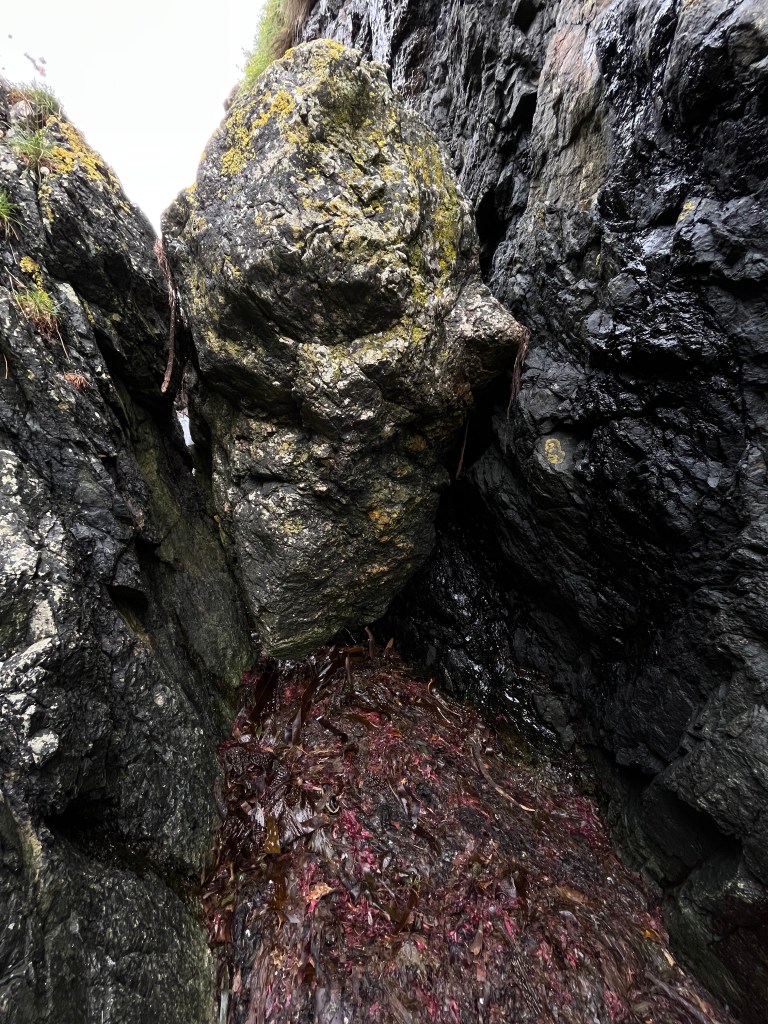

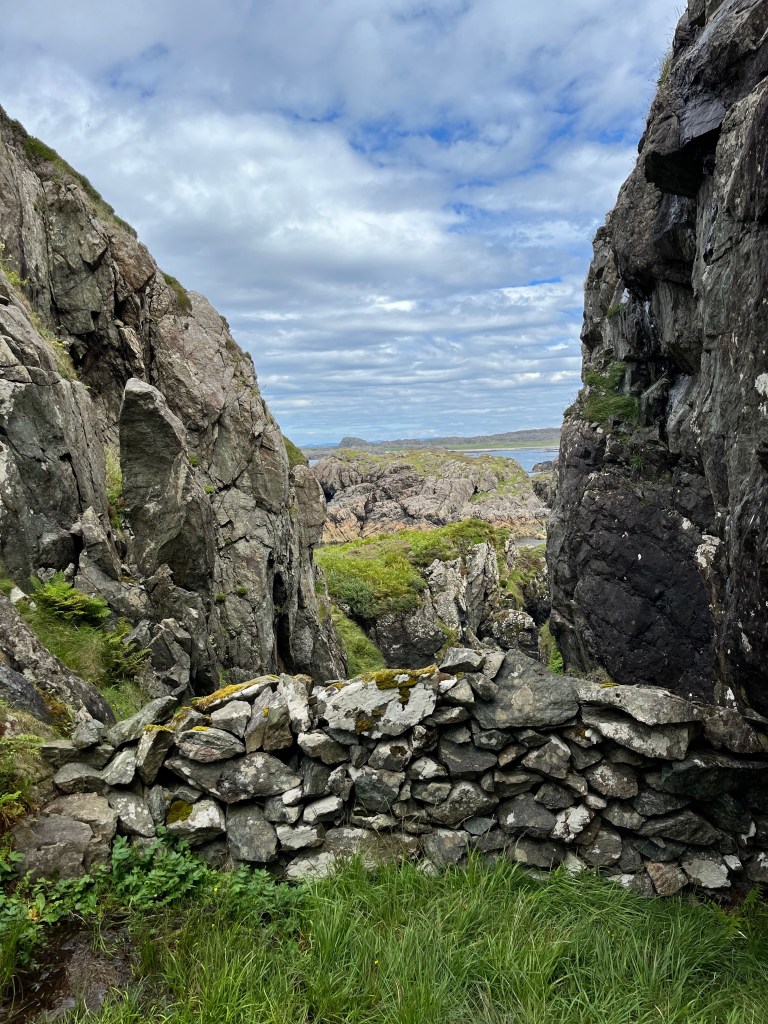
Back by the bay, old fishing traps were stranded on the beach: their inter-tangled ropes now filled with pebbles. I walked up another crevice on the opposite side of the bay. I found a small stone wall built between the two sheer cliffs. Scaling it, I could climb up to a headland that I had thought inaccessible. The fields seemed untrampled.

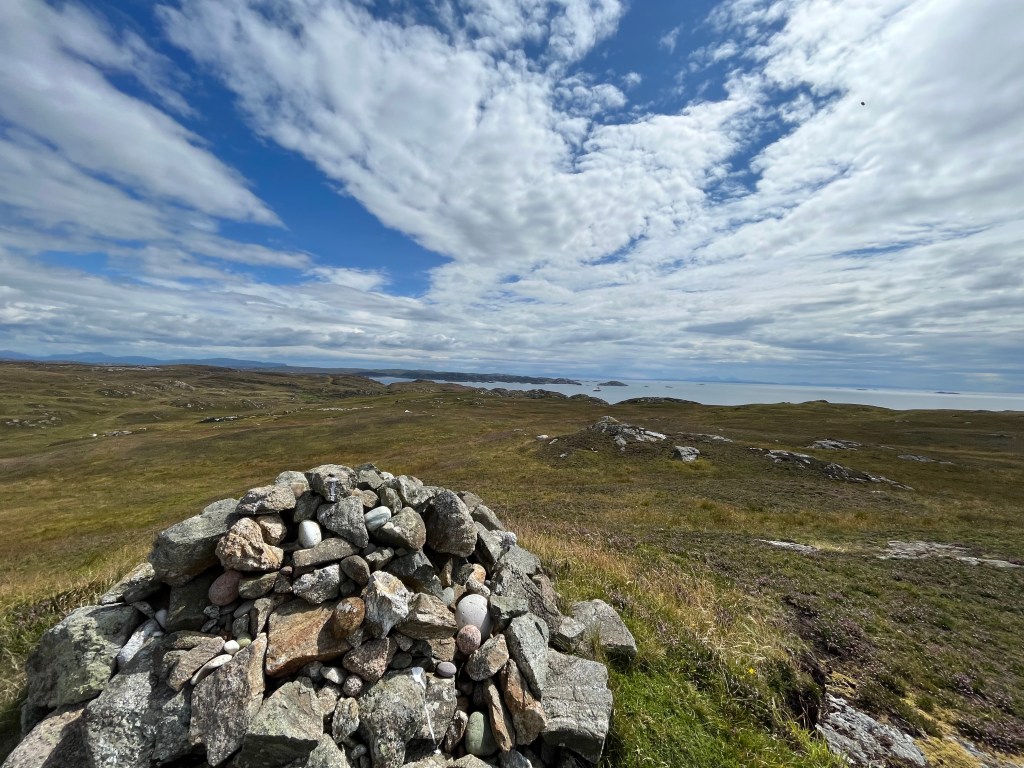
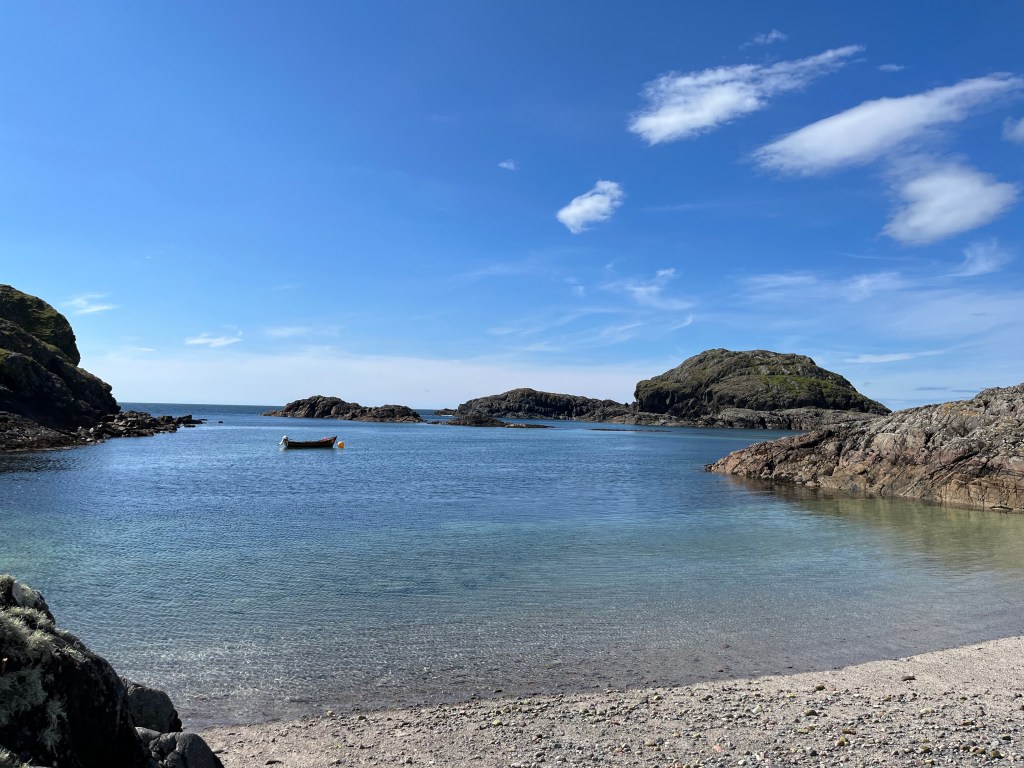
I eventually found my way down to another bay on the other side of the promontory, found a place to scale the steep hill (the sheep grazing on the side gave me some hint that it could be climbed), and I made my way up to one of the highest points on the south coast. After this, tired, I made my way back to camp, and had a celebratory swim afterwards in a little bay on the west by a little boat.
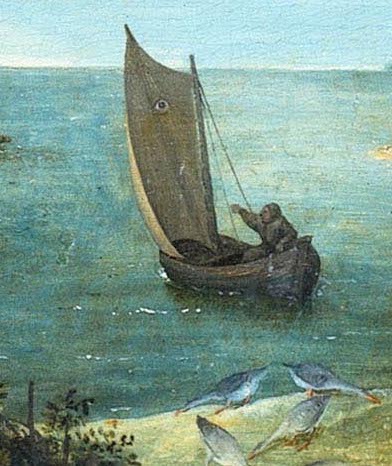
 An Eye on the Sail