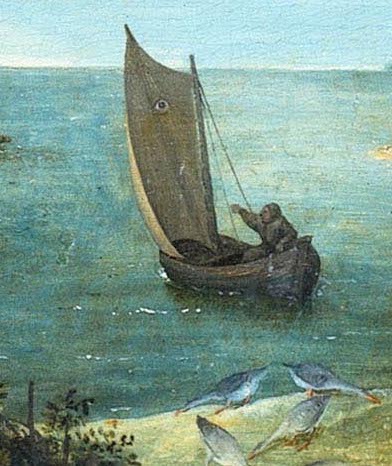

I started walking along the northwestern coast after what were easy-going paths around the northern tip of the island. It became apparent quite early on that this coast was going to be rugged and harder to navigate.
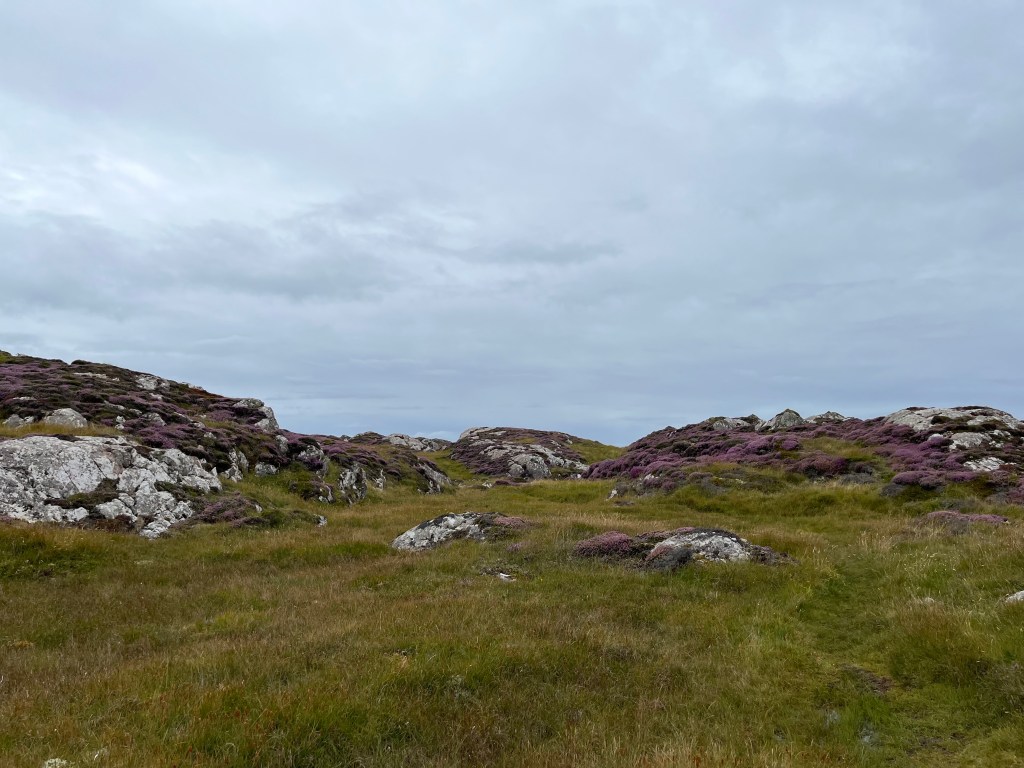
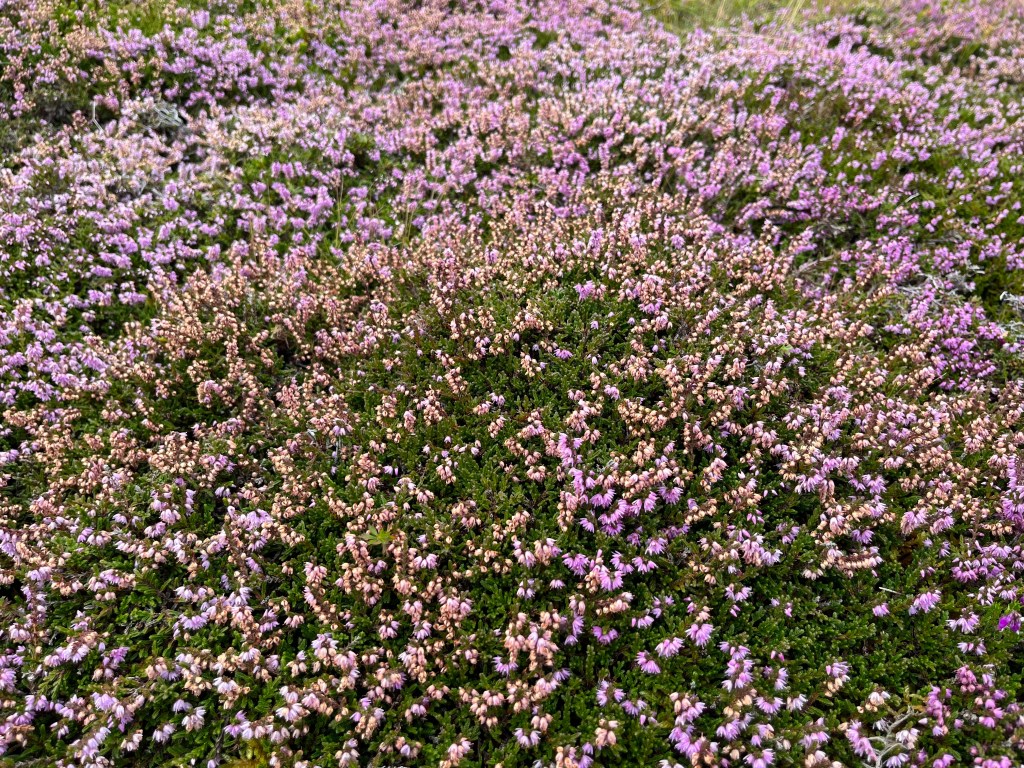
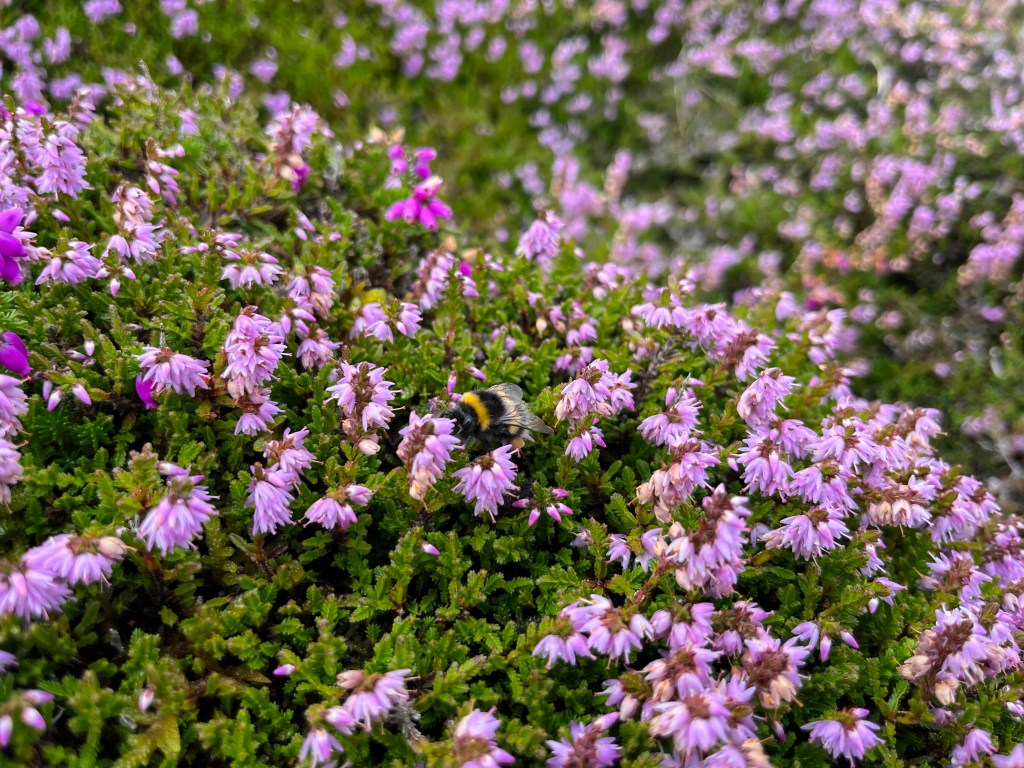
The ground became marshy. I could see the soil and vegetation turn from sandy golds and bright greens to deep browns. I crossed over a fence and made for one of the first peaks along the coast to reach higher ground. What I noticed as I climbed, and what is characteristic of Iona’s uplands, is the bright pinks and purples of the heather that cover its hills. This was the joy of following the northwest coast. With the heather came bumble bees, and their buzzing was the sound of success once another summit was reached.
I turned inland however, to see some ruined buildings marked on my map, and it was this turning back towards the marsh that difficulties began again. Iona became a maze. I would take a bearing on high ground, move towards it, and by having to avoid deep watery marshes and navigate hills, I would quickly lose myself and had to repeat the process again. Eventually I found a fence that I could situate myself against and came across the ruined buildings.
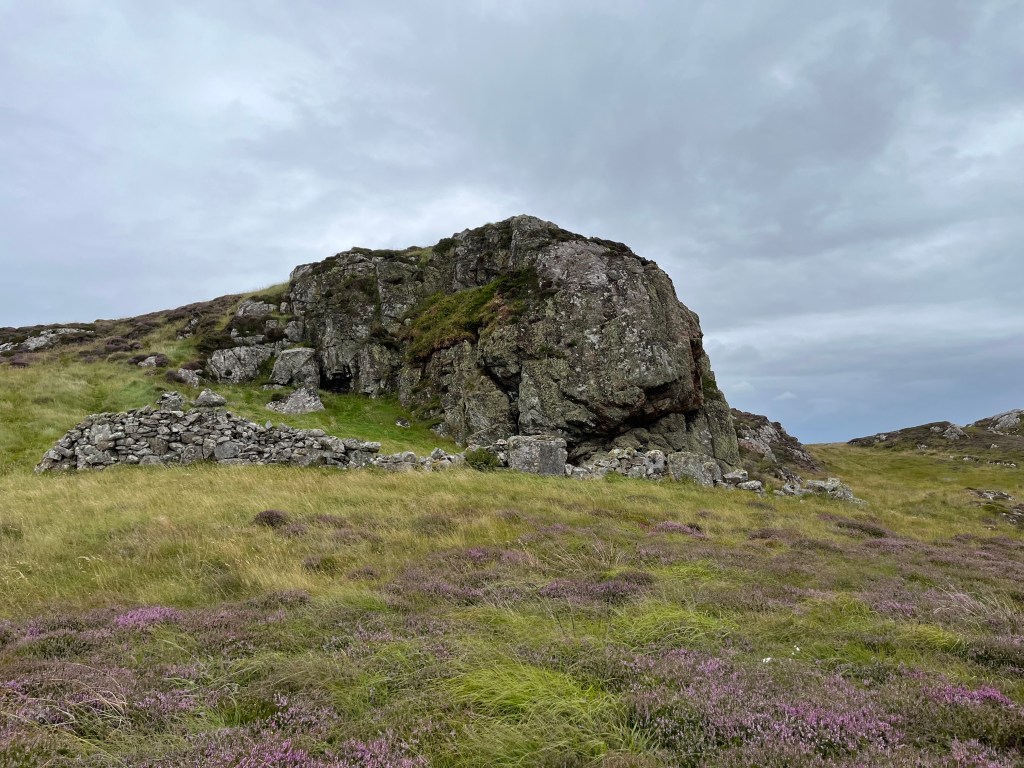
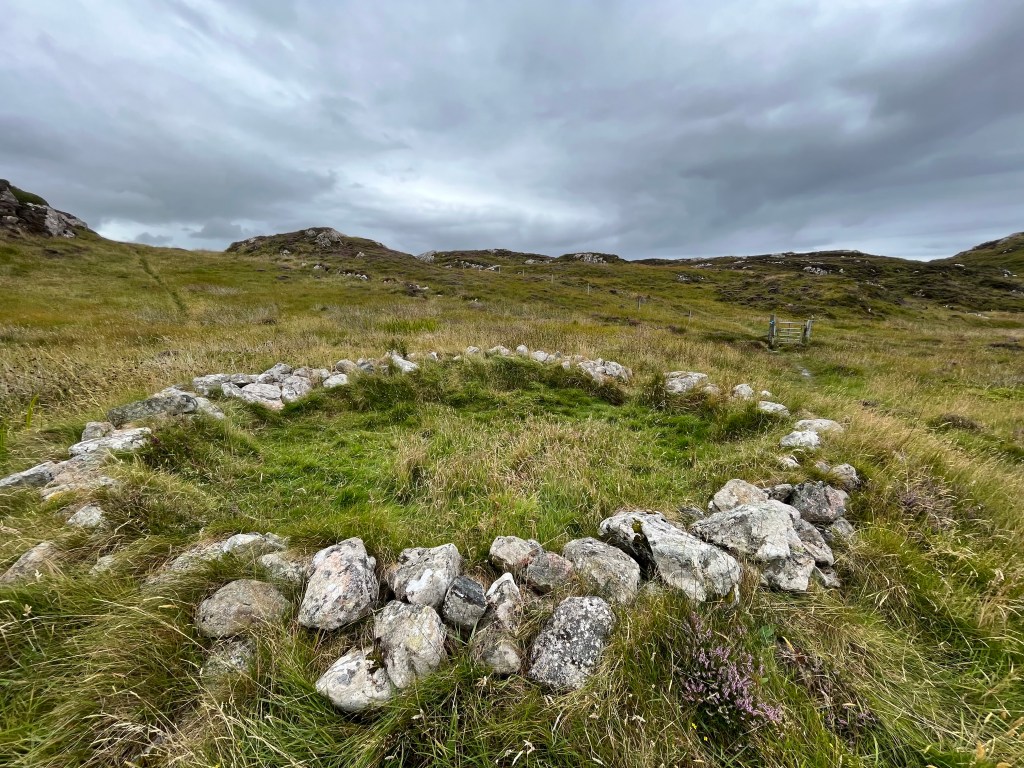
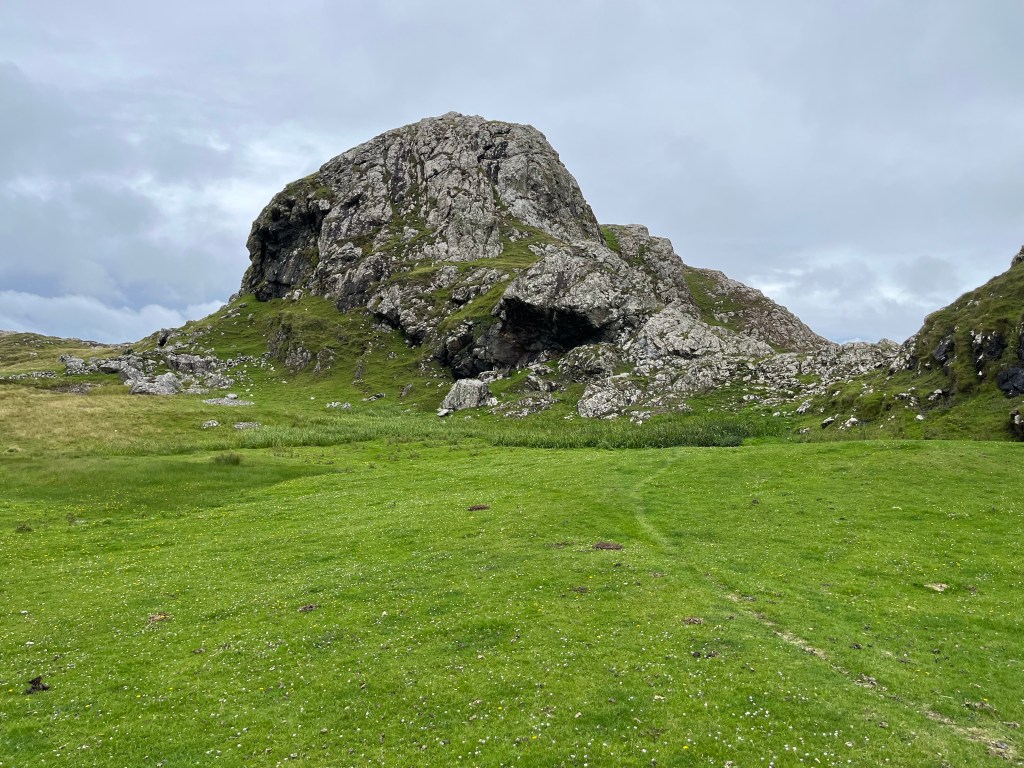
After some more trudging in the interior of the island, I set my sights on Dùn Cùl Bhuirg, a large hill on the coast, host to an Iron Age Hill fort. Climbing the hill was a treat but searching for the fort was a slight disappointment: some stone walls are all that I could see remaining. Excavations were over five decades ago, and the diagrams on the excavation report were not a good guide to finding all the sites. Maybe I don’t have an archaeologist’s eye.
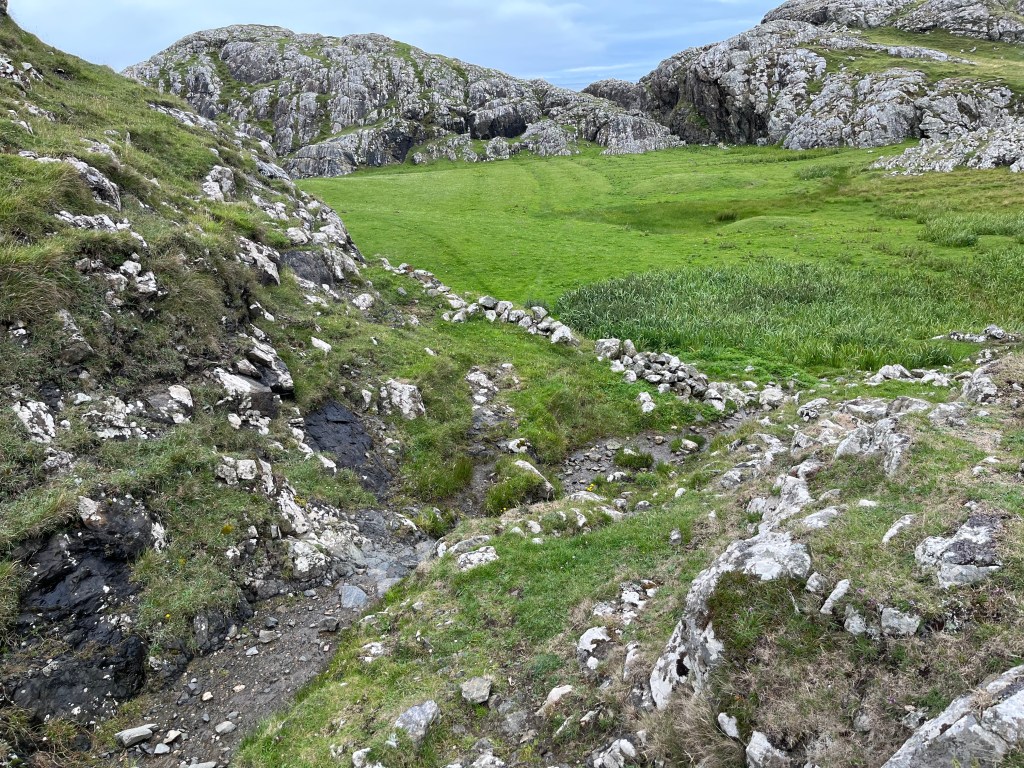
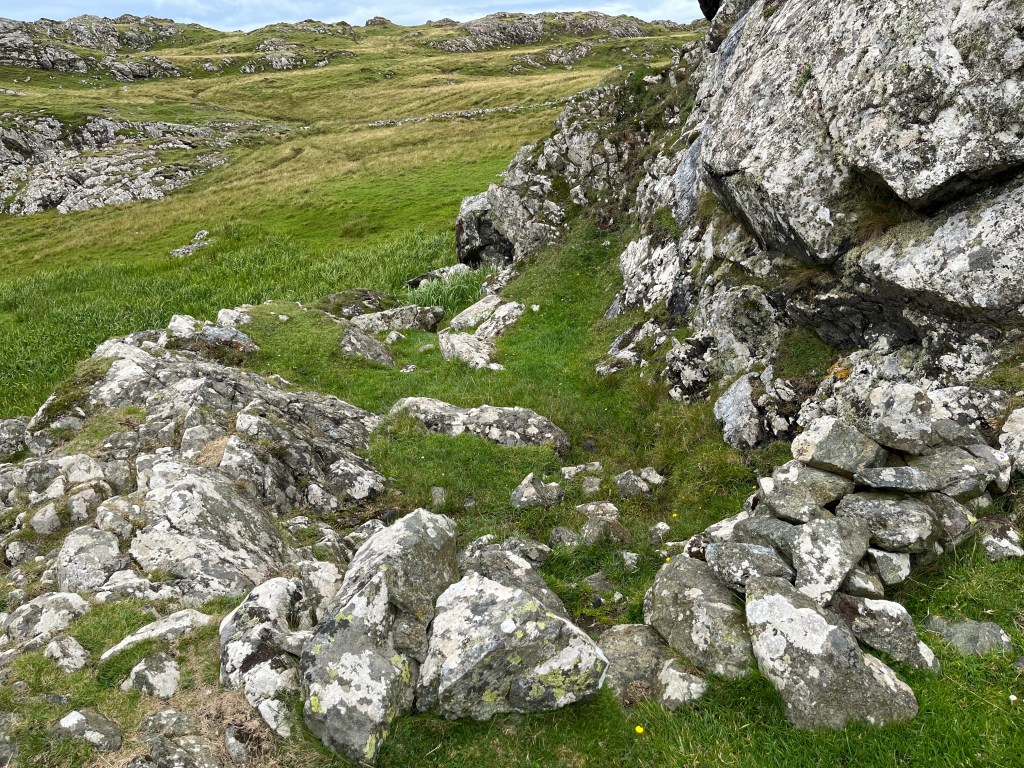
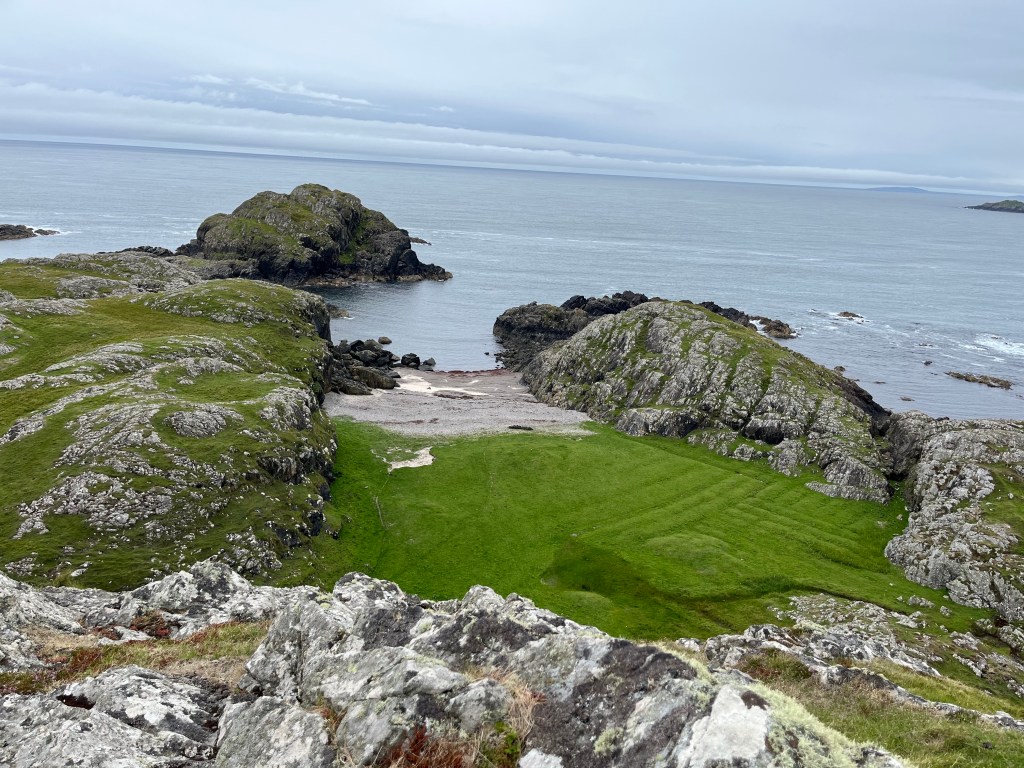
Active between the first and third century AD, the fort is our best understanding for life on the island before the arrival of St Columba and his monks. There is carbon dating and pollen evidence from the east coast that reveal some habitation pre-Columba too, but those are far less detailed pieces of evidence. Some say the fort had a subsistence economy that can be compared against the fully harnessed potential of the island by the early Christian monastery. I personally believe that Dùn Cùl Bhuirg is more likely to have been a seasonal or ritual feasting site. In part, my reasoning is informed by its location. What I found most interesting in the archaeological report, and now fortified after trudging through marsh to reach the hill’s eastern face, was that the site truly commanded the western shore of Iona. The main sightlines and paths below the fort all control the small bays along the coast. These were all visually fascinating, but the main place of habitation on Iona has always been on the east coast, away from the dominant westerly winds. Why build a fort on the west? I have thoughts on why this may have been, but need time to think more on it…
 An Eye on the Sail