
The trip did not get off to a great start: I slept through my alarm and missed my first train. Luckily, or perhaps I have some level of clairvoyance, I had booked the departure early enough in the morning that there was still a train available to make my planned schedule still work.
The first train was largely uneventful. The highlight of taking the route up the west coast of England is always when you pass through the lakes. Along the way I did notice that the train tracks at speed often seem to weave together, mostly as you enter and leave a city: routes woven together and then unwoven. However, my train was getting delayed, and with every extra minute the journey took, the time I had to make my connection grew slighter. Planning alternative ways to make my schedule work moved to the forefront of my mind in the scenario that I missed my next train. So, having only seen a small portion of Glasgow and even that much at quite a brisk pace I cannot comment much on the city. I did however get to my train on time.
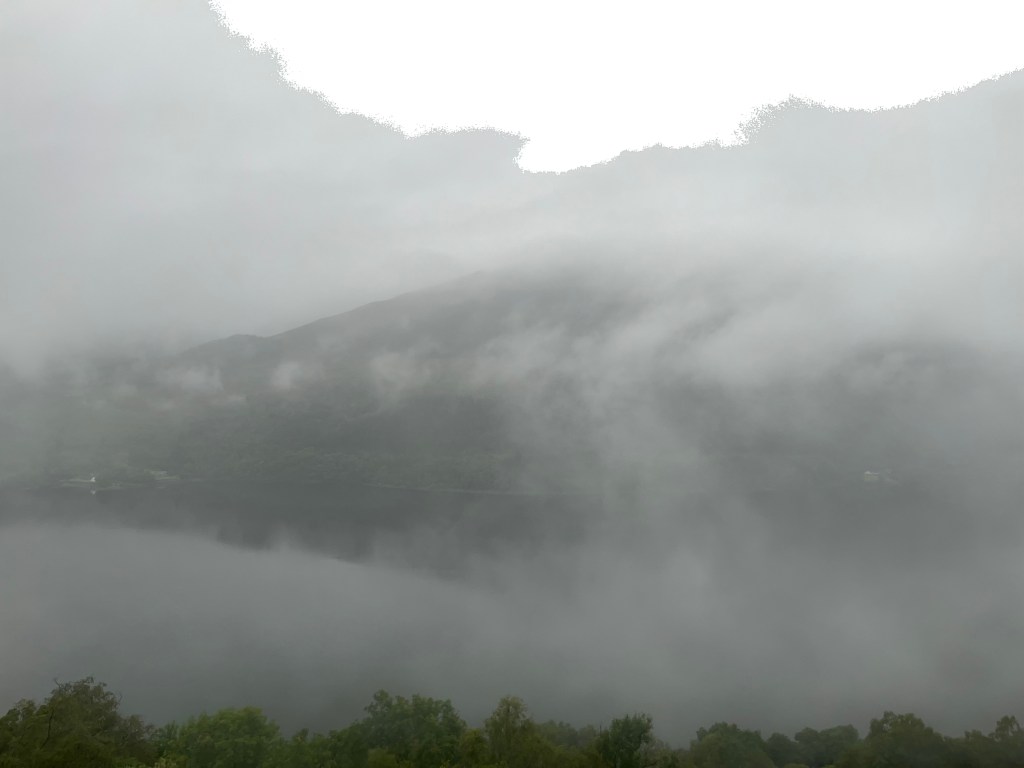
My second train to Oban was fantastic. Following the Clyde for the first portion of the trip the river’s water was so still it was as if it were frozen solid. It was just spitting rain for most of the train trip but as we headed into Scotland’s interior the rain turned into a thick mist that covered the surrounding hill faces. Past Loch Lomond, we entered some winding river valleys that eventually exited into Loch Awe.
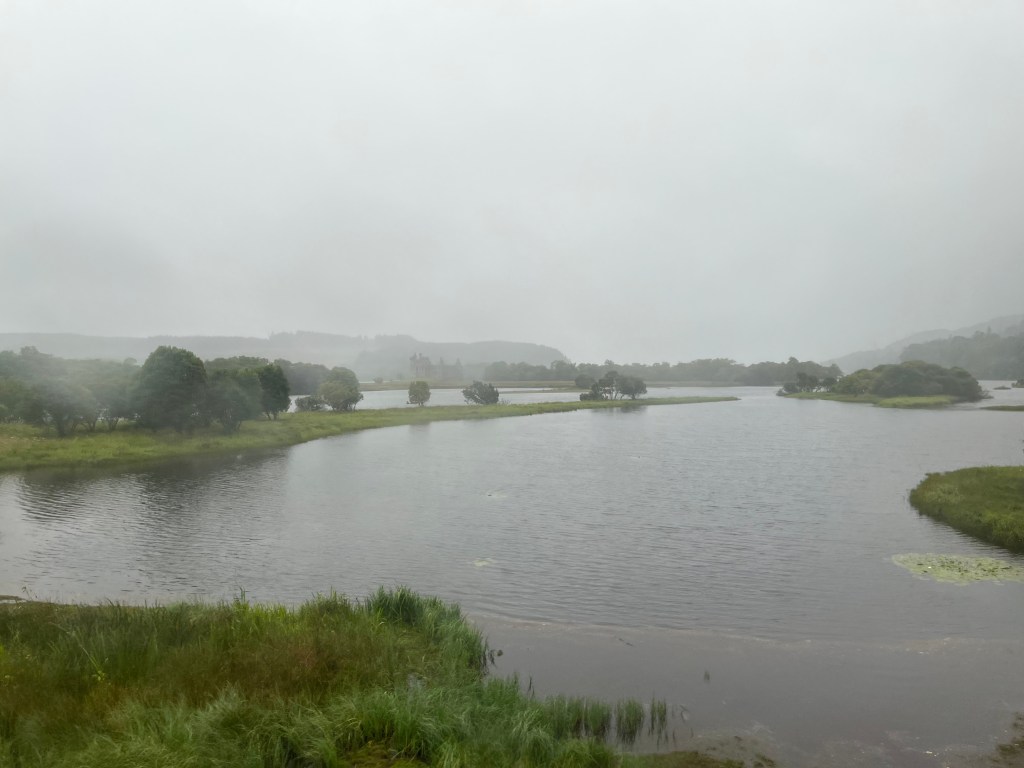
The views as we passed low by the Loch were great, and as the train began to move up the river I remembered that Iona had founded a daughter monastery in the area. The monastery called the ‘Church of Diún’, Cella Diuni in Latin, Cell Diúin in Old Irish, was run by the monk Cailtan, who was its prior and brother to the Diún who founded the monastery. St Columba had a prophecy that Cailtan would die by the end of the week and so sent two of his monks from Iona to Loch Awe to retrieve the man. As Columba told Cailtan: ‘I love you as a friend and want you to be able to end your life here with me in true obedience’ (§i.31). Both cried, then Caitlan retreated to the guest house where he took ill and passed away before the week was over. It is strange to see these stories integrated into the landscape you are passing through.
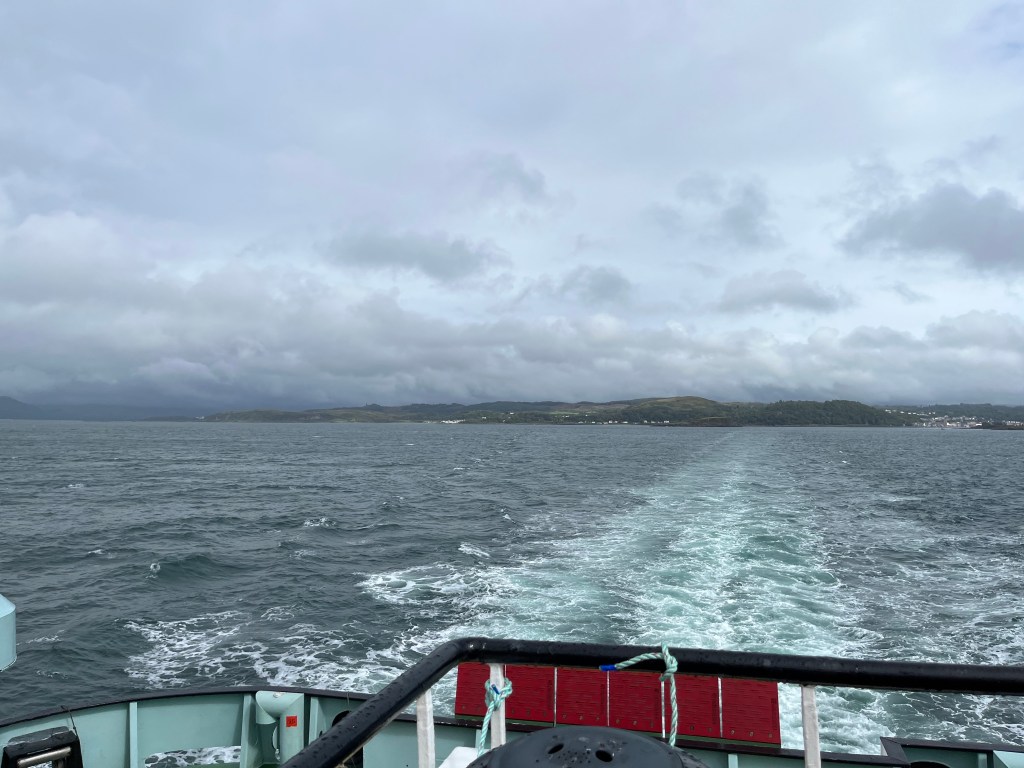
I arrived shortly thereafter at Oban and got on the ferry to Craignure on the Isle of Mull. Spending much of my time on the deck of the ferry, it was probably the first moment where I could feel the distance from Oxford. Looking off the deck at even that short space of water created a far greater feeling of remoteness in me than had the previous hours of interlacing train tracks. From Craignure it was a bus to the other side of Mull where I finally got to see Iona. The mist slightly obscured the isle. Boarding the second ferry, the final leg in my journey, was a strange feeling. In some choppy waters we finally reached the island.
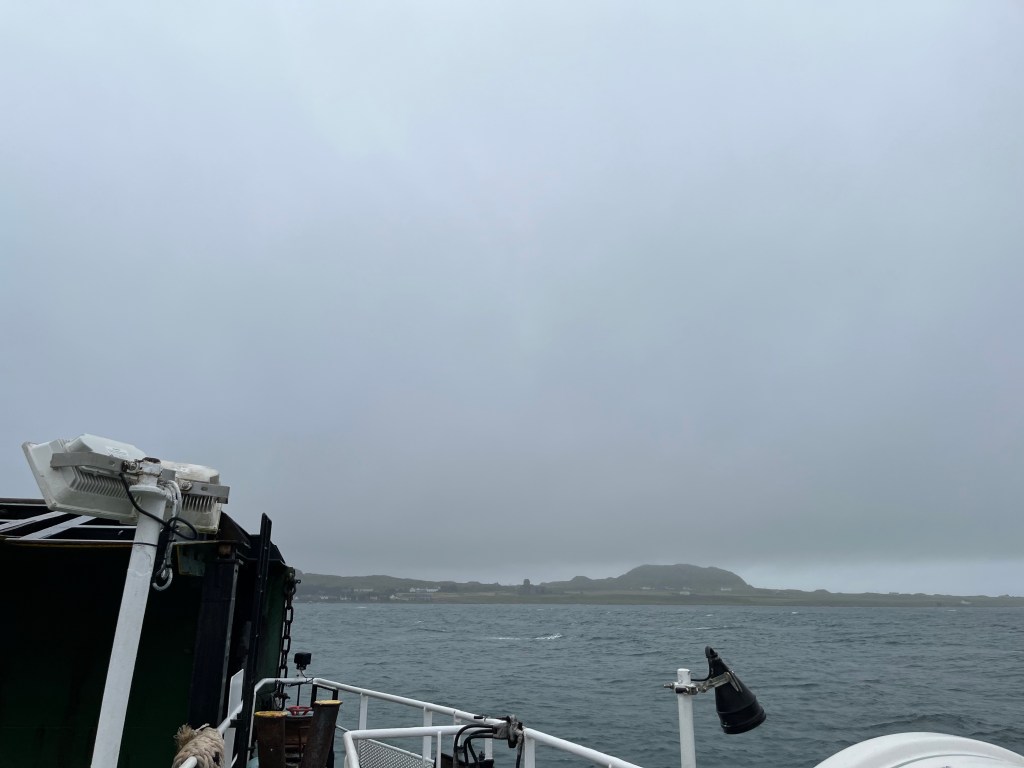
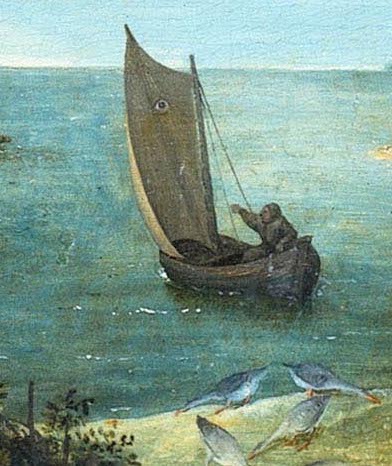
 An Eye on the Sail